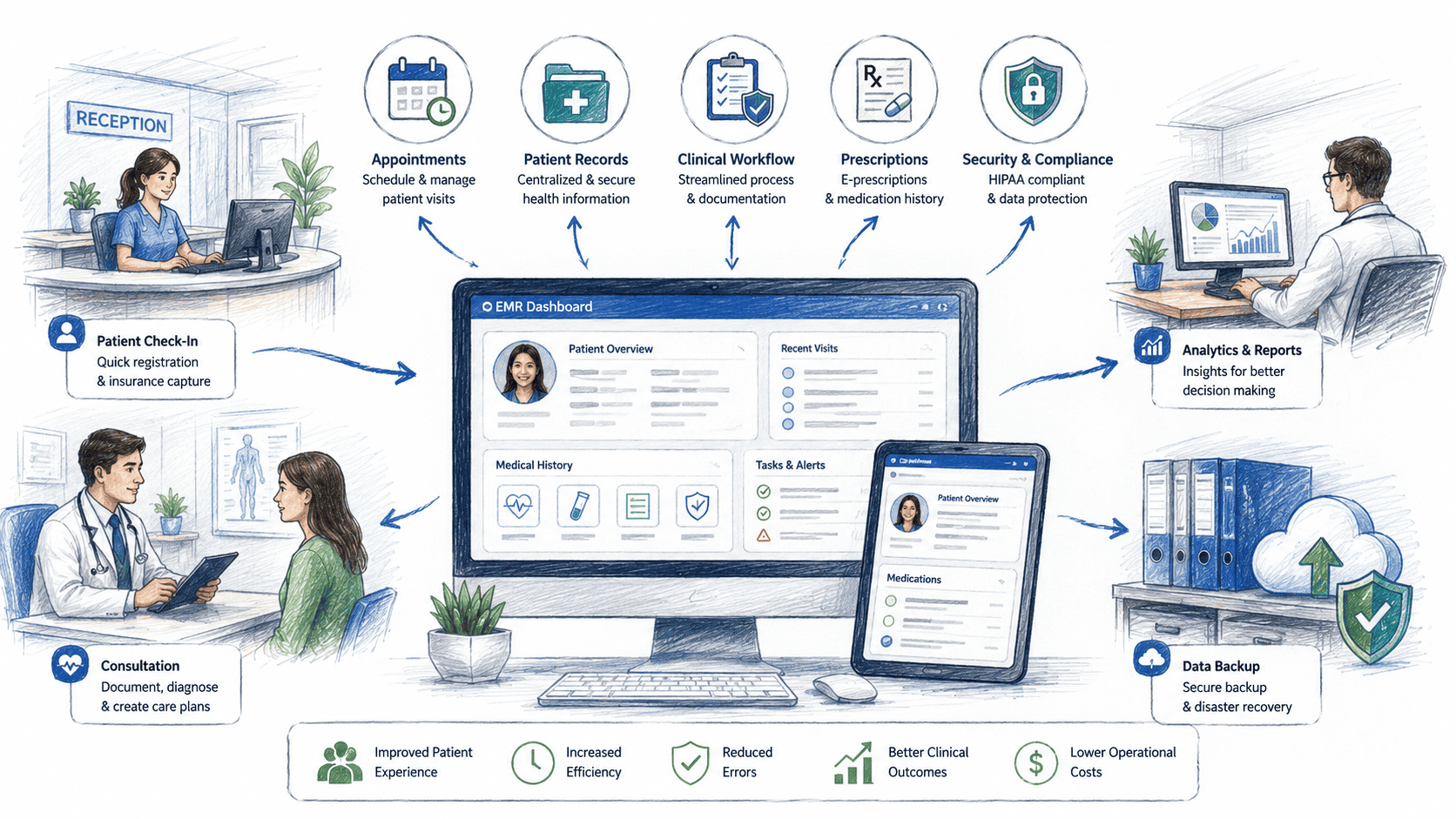
DocVoz is a practical, outcomes-focused healthcare technology company. Their product is a cloud hosted EMR, and clinic management platform built on a .NET backbone and deployed on Microsoft Azure. The solution reflects strong enterprise software development principles with scalable architecture, configurable workflows, and secure, auditable data handling. Designed to integrate seamlessly with existing healthcare ecosystems, the system avoids rip and replaces cycles through flexible integrations and modular updates. DocVoz supports single doctor practices and multi-site hospital groups alike, emphasizing HIPAA safe operations and real time access to patient information.

DocVoz Cuts Administrative Time by 52%
and Boosts Clinic Throughput by 63%
Company Brief
Overview
Clinics are simple and messy at the same time. They run on small rituals paper checklists at the front desk, a routine triage script in the nurse station, a particular billing checklist in the back office. When those rituals meet modern expectations (telehealth, electronic claims, instant lab results), the gaps show up quickly: duplicated entry, missed follow ups, and time lost reconciling systems.
We worked with DocVoz to take those scattered pieces and bring them into one platform through a enterprise software development solution tailored for healthcare operation. The engagement was hands on product workshops with clinicians, half day observations in reception and billing, iterative prototyping with pilot clinics, and a phased rollout so each site could migrate without disruption. The goal was practical reduce manual work, speed access to records, and improve billing accuracy while making sure clinicians felt the system supported their actual day, not just administrative theory.
- Sector: Healthcare Technology, Digital Health Transformation, EMR Solutions
- Project Type: SaaS Based Healthcare Management Platform
- Platform: Web, Mobile (iOS & Android) | .NET | Cloud Hosting (Azure) | SQL Server | Secure API Integrations
Business Challenges
- Multiple disconnected systems slowed everyday tasks – Clinics were using separate apps for scheduling, charting, billing and lab results. Staff ended up copying information across systems; that repeated entry created errors and wasted time.
- Paper and manual steps dominated administrative workflow – Intake forms, consent signatures, and billing tasks relied on manual entries that lacked automation or workflow quality assurance, creating end-of-day backlogs.
- Limited remote access restricted care models – On premises servers and desktop only tools made it difficult for clinicians to work from other sites or provide telehealth reliably.
- Compliance and audit readiness were resource-intensive – Clinics struggled to keep complete, auditable logs across disparate systems which raised risk during external audits.
- Poor operational visibility for managers – Leaders lacked quick, reliable metrics (no shows, claim rejection rates, appointment fill rates), so identifying bottlenecks was slow and reactive.
- Integration gaps created workflow friction – Lab systems, imaging platforms, and payer portals didn’t talk cleanly with one another, so results and claims often arrived late or in inconsistent formats.
Technology Powered Solution
- Single cloud workspace (EMR + practice management) – We built a unified web based interface that holds charts, schedules, billing records and communications in one secure database no more context switching across disparate tools.
- Flexible workflow builder – Rather than force a single process, clinics get a drag and drop workflow designer. A paediatric clinic, an outpatient surgery centre, and a primary care office can each map their steps and adjust as they evolve.
- Azure hosted, .NET reliability with HIPAA controls – The stack gives predictable uptime and enterprise grade encryption. We layered role based access and detailed audit logs, so compliance is baked into everyday use.
- Practical integrations via secure APIs – Lab orders, diagnostic imaging results, and insurance eligibility checks exchange data automatically so clinical staff stop chasing results and finance teams get cleaner claim files.
- User experience modelled on clinic roles – Front desk screens show the day’s appointments and quick check in actions. Nurses see vitals and pending orders. Physicians open the chart, see the problem list, and sign off. The design reduces clicks where it matters.
- Real-time dashboards and light analytics – Managers see appointment throughput, outstanding claims, and daily revenue briefly no spreadsheet gymnastics required.
- Automated patient messaging – Built in SMS/email reminders trim no shows and send lab notifications small automations with immediate impact on throughput.
- Offline buffer and sync – For sites with spotty connectivity, the system accepts data locally and syncs automatically when the connection returns important for some rural clinics.
- Mobile app development integration — The platform’s mobile app development extended accessibility for clinicians, allowing real-time chart updates, patient check ins, and task management on the go, ensuring continuity of care beyond the desktop.
Measured Impact
- Administrative workload fell 52% – Routine tasks check in, data entry, claim reconciliation became largely automated. Staff time previously spent on paperwork shifted back into patient coordination and patient facing tasks.
- Overall clinic throughput rose 63% – With faster chart access and fewer back office bottle necks, clinics handled significantly more visits per day without stretching staff.
- Billing accuracy improved by 40% – Automated claim validation and tighter data integrity cut common rejection reasons and accelerated reimbursement.
- Data retrieval accelerated 80% faster – Clinicians who previously searched multiple systems now pull a complete patient history in seconds at the point of care.
- No show rates dropped typical reduction 28% – Automated reminders and clearer scheduling options led to better patient attendance in pilot sites.
- Faster onboarding and rollout – The SaaS model and templated workflows shortened implementation; many new sites went live in days rather than weeks.
- Compliance posture strengthened – Audit trails and permissioned access reduced compliance related effort during external reviews.
Conclusion
This engagement was not a textbook IT replacement. It was a practical project: we watched receptionists, nurses and billers do their work; we changed the product to match their needs; and we rolled it out in a way that respected the clinic’s day to day rhythm. The result is an operational platform that reduces repetitive work, speeds clinical decisions, and improves financial outcomes.
Client Says
The demo has proved to be a powerful tool in investor meetings, garnering encouraging reactions. Ansi ByteCode excelled at collaboration, responding quickly and integrating all requested changes.

Greg Foster
GM & Founder of Vizen Analytics LLCAcross all of their projects, Ansi ByteCode has helped to realize efficiencies in processes and technologies, as well as increase ROI. Their flexibility and willingness to go above and beyond project scope sets them apart from other offshore vendors.

Andrew Martins
Former Executive, Manufacturing CompanyAnsi ByteCode has been conscientious and reliable since our initial project 4 years ago. They do not over promise or under deliver. We continue to work with them and will for some time.

Eddie Allen
Co-Owner with my wife Lori Allen at BBL Systems, IncAnsi ByteCode is reliable and diligent software development company. They can project manage themselves and ultimately create the software as the design requirements are given to them.

Jonathan Spence
Chief Executive Officer at XtractaI really enjoy working with this company. They follow up regularly on developments and they work well. We don't have to explain 50 times for them to understand the idea of development.

Cdric Boivin
Président - CEO at Secure ExchangesAnsi ByteCode LLP successfully reached its goal. The project management was professional and structured. Their team was very good at listening to the customer.

Christoffer Stub Michelsen
CEO, StubTEC

