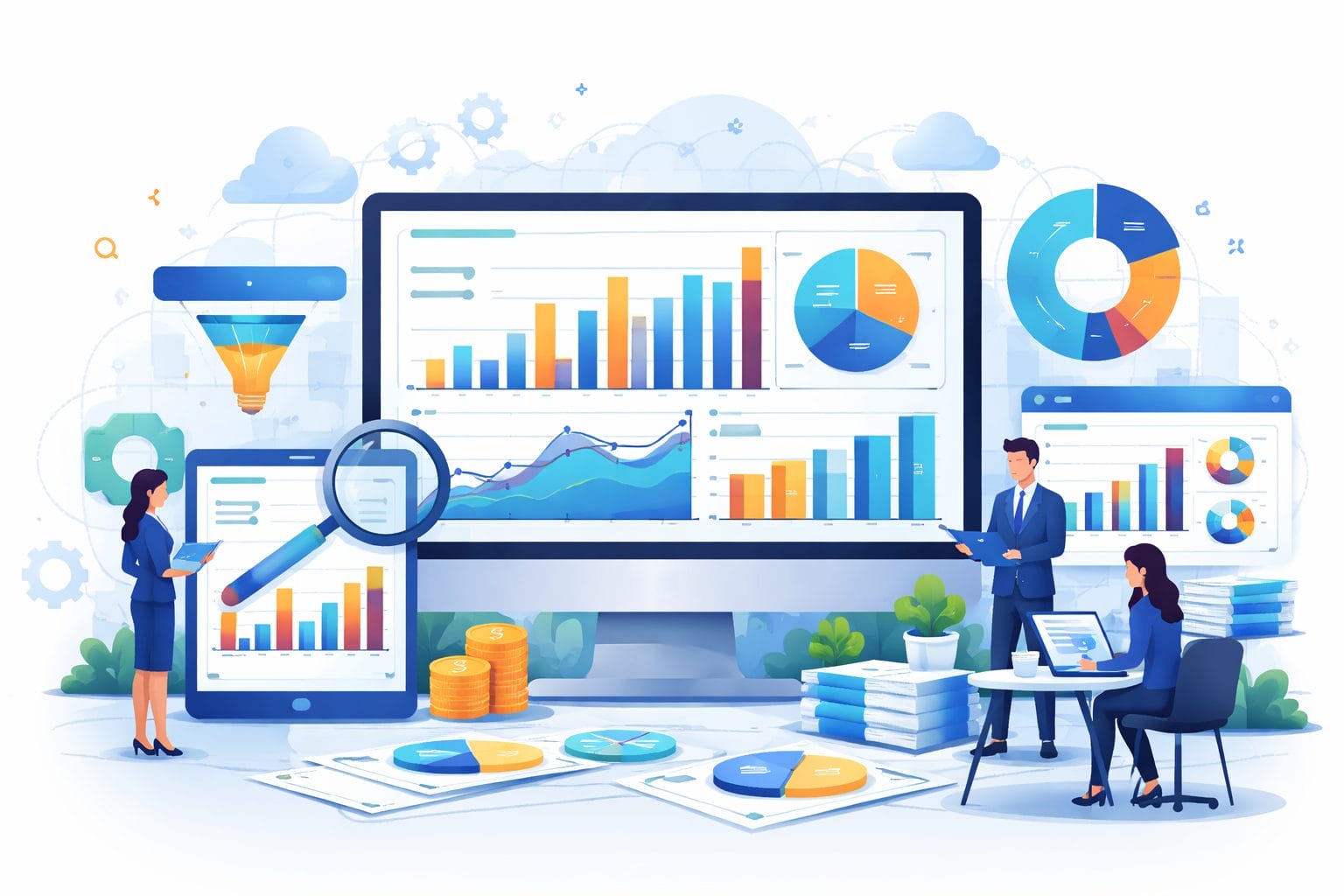
Businesses now deal with tons of info. Every chat with customers, every purchase, and every online click adds more details that may reveal new growth opportunities. Yet many organizations struggle to turn this raw data into meaningful decisions. That’s where business intelligence comes in. Think of BI as your friend who turns messy and historical data into clear action steps. Instead of drowning in stats from different spots, it sorts things out, often through cloud-based solutions, smart data visualization, and well-engineered platforms supported by strategic technology consulting. Rather than confusion, there’s clarity; instead of guesswork, direction shows up.
This guide breaks down business intelligence, how it differs from analytics, and how data becomes real business decisions.
Table of Contents
- What Is Business Intelligence?
- Business Intelligence Versus Business Analytics
- Business Intelligence Process
- Benefits of Business Intelligence
- BI Use Cases
- Best Practices for BI
- Business Intelligence Tools
- Why Choose Ansi ByteCode LLP for Business Intelligence Solutions
- FAQs on Business Intelligence
What Is Business Intelligence?
Business Intelligence (BI) is the practice of collecting, organizing, analyzing, and visualizing data to support better decisions across an organization.
It helps teams at all levels understand what’s happening in the business, identify patterns, track performance, and respond with clarity rather than assumptions. At large organizations this scales into enterprise business intelligence, where data from every department feeds a single governed platform rather than isolated departmental reports.
BI combines technology, processes, and methods to help companies understand their operations better. The tool collects from multiple data sources like customer databases, sales data, and market research, then organizes and analyzes this information. The result? Live dashboards, detailed reports, and visual charts that make complex data easy to understand.
What makes BI different from traditional reporting is its focus on speed and accessibility. Modern BI platforms let managers explore data themselves without waiting for IT departments. You can dive down into specific details, notice patterns, and share information across your team in real time.
Business Intelligence Versus Business Analytics
While people often mix these terms, BI and business analytics have different purposes.
Business intelligence answers “what happened” and “what is happening.” It looks at current and historical data to give you a clear picture of your business performance. For example, BI tells you that sales dropped 15% last quarter or that customer complaints increased in a specific region. It’s descriptive by nature, focusing on measuring and monitoring key data.
Business analytics goes a step further, answering “Why did it happen?” and “What will happen next?” Instead of just showing data, it uses statistics-based tools to forecast trends and recommend actions. The most effective companies use both together. BI provides the base of reliable data and reporting, while BA adds forecasts on top of that base data.
Business Intelligence Process
The BI process uses a step-by-step method, turning unprocessed information into clear findings, using logic and structure along the way:
Data Collection: First, you gather information from multiple sources like databases, spreadsheets, CRM systems, and market research. This step, where data mining helps in business intelligence involves identifying which raw data sources contain valuable information for your business.
Data Storage: Once collected, data gets stored in a central hub called data warehouses or data lakes. These organized storage systems make it easy to access and analyze large volumes of information securely.
Data Processing and Analysis: After extraction, the info gets cleaned up and transformed into a consistent format before being loaded. Analytical tools then examine the data to identify patterns and trends and remove unnecessary data.
Visualization: Numbers don’t tell anything useful, but charts, graphs, and dashboards do. BI tools create visuals that make complex data easier to understand. Good data visualizations let you spot trends instantly and help you with details when needed.
Reporting and Action: The final step involves sharing results with team members, leaders, and decision-makers through automated reports and dashboards. Decision-makers use these data to create action plans, such as adjusting marketing strategies, improving supply chains, or enhancing customer experiences.
This isn’t a one-time process. BI operates in cycles, continuously collecting new data and refining insights as your business evolves.
Benefits of Business Intelligence
Organizations implementing BI effectively see real improvements across multiple areas:
Smarter Decision-Making: Instead of relying on guesses, you make decisions on actual data. BI provides timely, correct information that tells about your business, helping you respond to opportunities and challenges faster.
Increased Efficiency: BI identifies bottlenecks and inefficiencies in your business operations. Maybe one process is dragging down output, while some ads bring no profit, so you see what’s working. That way, you fix steps that waste time, shifting effort where it counts.
Better Customer Understanding: BI looks at how they act, what they like, or what they say. So you can tweak ads based on individual tastes, spot demands before they arise, and fix problems early. That way, customers stay loyal and increase customer satisfaction.
Competitive Advantage: Stay one step ahead when you spot trends before others do. Because you see what’s coming, new chances turn into quick wins. Instead of guessing, smart tools show live updates from the scene. BI helps you stay ahead by providing real-time market intelligence.
Improved Financial Performance: By identifying cost-saving and revenue growth areas, BI helps you increase profits. Companies using BI effectively report faster decision-making speeds and higher profitability.
Enhanced Collaboration: Modern BI platforms support teams across departments to access the same data and insights. This ensures everyone stays aligned without guessing or assuming on their own.
BI Use Cases
Business intelligence supports decision-making across industries and departments by turning everyday data into usable insights.
Retail and E-commerce:
Retailers use BI to analyze buying patterns, manage inventory levels, and tailor promotions by region or customer type. Sales trends from past seasons help plan future stock and pricing strategies. Personalized offers are created using actual purchase history rather than assumptions.
Healthcare:
Hospitals and clinics rely on BI to track patient outcomes, monitor bed availability, reduce readmission rates, and optimize staffing schedules. These insights help improve patient care while controlling operational costs.
Finance and Banking:
Banks use BI to detect unusual transaction patterns, assess risk, segment customers, and stay compliant with regulations. Dashboards help teams respond quickly to potential fraud or financial exposure.
Manufacturing:
Manufacturers use BI to monitor production efficiency, quality metrics, equipment performance, and supply chain delays. This reduces downtime and improves planning.
Marketing and Sales:
Teams track campaign performance, conversion rates, customer acquisition costs, and high-value segments. BI helps allocate budgets where they generate the strongest returns.
Human Resources:
HR teams use BI to analyze attrition, productivity, hiring trends, and training outcomes, enabling smarter workforce planning.
Best Practices for BI
Implementing BI successfully takes more than choosing the right tool. These practices help ensure real impact:
Start with Clear Objectives: Define the questions you want answered. Build BI around real business problems, not trends or vanity metrics.
Maintain Strong Data Quality: Accurate insights depend on clean, consistent data. Set standards for validation, formatting, and updates early on.
Encourage a Data-Driven Culture: Train teams to read and use dashboards confidently. Decisions should be guided by evidence, not assumptions.
Enable Self-Service: Choose tools that allow non-technical users to explore data on their own. Faster access leads to better adoption.
Start Small and Scale Gradually: Pilot BI with one team or use case, demonstrate quick value, then expand step by step.
Establish Data Governance: Define who owns data, who can access it, and how it should be used. Consistency builds trust.
Keep Dashboards Relevant: Review and update dashboards regularly so they reflect current goals and priorities. BI should evolve as the business does.
Business Intelligence Tools
Here are the most widely used and reliable BI tools:
Microsoft Power BI: A strong choice for organizations using Microsoft products. Easy integration, competitive pricing, and solid reporting capabilities make it widely adopted.
Tableau: Known for powerful visualizations and interactive dashboards. Ideal for users who want to explore data visually and deeply.
Qlik Sense: Offers associative data exploration, allowing users to uncover relationships and patterns without rigid query structures.
Looker (Google Cloud): Built for cloud environments, Looker works well with modern data stacks and allows detailed modeling through LookML. Best suited for data-mature teams.
Choosing the right tool depends on your data environment, budget, scalability needs, and user skill levels.
Why Choose Ansi ByteCode LLP for Business Intelligence Solutions
Getting BI right isn’t just about picking software; it needs skill in handling data plans, connecting systems, or guiding team shifts. Organizations that use BI transform how they operate, gaining visibility into operations and making faster, more confident decisions based on reliable data.
At Ansi ByteCode LLP, we understand that every organization’s journey is unique. Our team specializes in designing and implementing business intelligence services tailored to your specific business challenges and goals. We guide you through every step, from defining your BI strategy and selecting the right tools to building dashboards. Not just that, we teach your people how to use it, so things keep running smoothly later on. It doesn’t matter if you’re launching something new or upgrading what’s already there; we make sure numbers work hard for you, giving you an edge others can’t copy.
FAQs on Business Intelligence
Business intelligence helps organizations make better decisions by turning data into clear, actionable insights. These common questions address what BI is, how it works, and why it matters for modern businesses.
Which best describes an example of business intelligence?
A retail business uses BI to check sales from different locations; it turns out item X does well in area Y at certain times of year, so they shift stock levels and tweak ads based on that. That’s one way companies put BI to work.
What are the 4 pillars of business intelligence?
The four pillars are
- Data collection (gathering information from various sources)
- Data storage (storing data centrally)
- Data analysis (processing and examining data for patterns),
- Data visualization (presenting data through dashboards and reports).
What are the 4 types of business intelligence?
The four kinds include descriptive BI, which shows what occurred; diagnostic BI, which explains the reasons behind it; predictive BI, which gives a glimpse of future events; and prescriptive BI, which suggests steps to follow. Many classic BI tools lean heavily on spotting past trends and figuring out causes.
What is another name for business intelligence?
Business intelligence is sometimes called data analytics, enterprise analytics, descriptive analytics, or business analytics and predictive analytics, though these terms can have slightly different meanings depending on context and specific applications.
What does someone in business intelligence do?
Business intelligence analysts pull info from different spots, then combine it smoothly. They build reports along with dashboards that show key details. Looking at patterns helps them spot where things can get better. Their analysis highlights shifts in how a business performs. Clear takeaways guide decision-makers toward smarter choices.