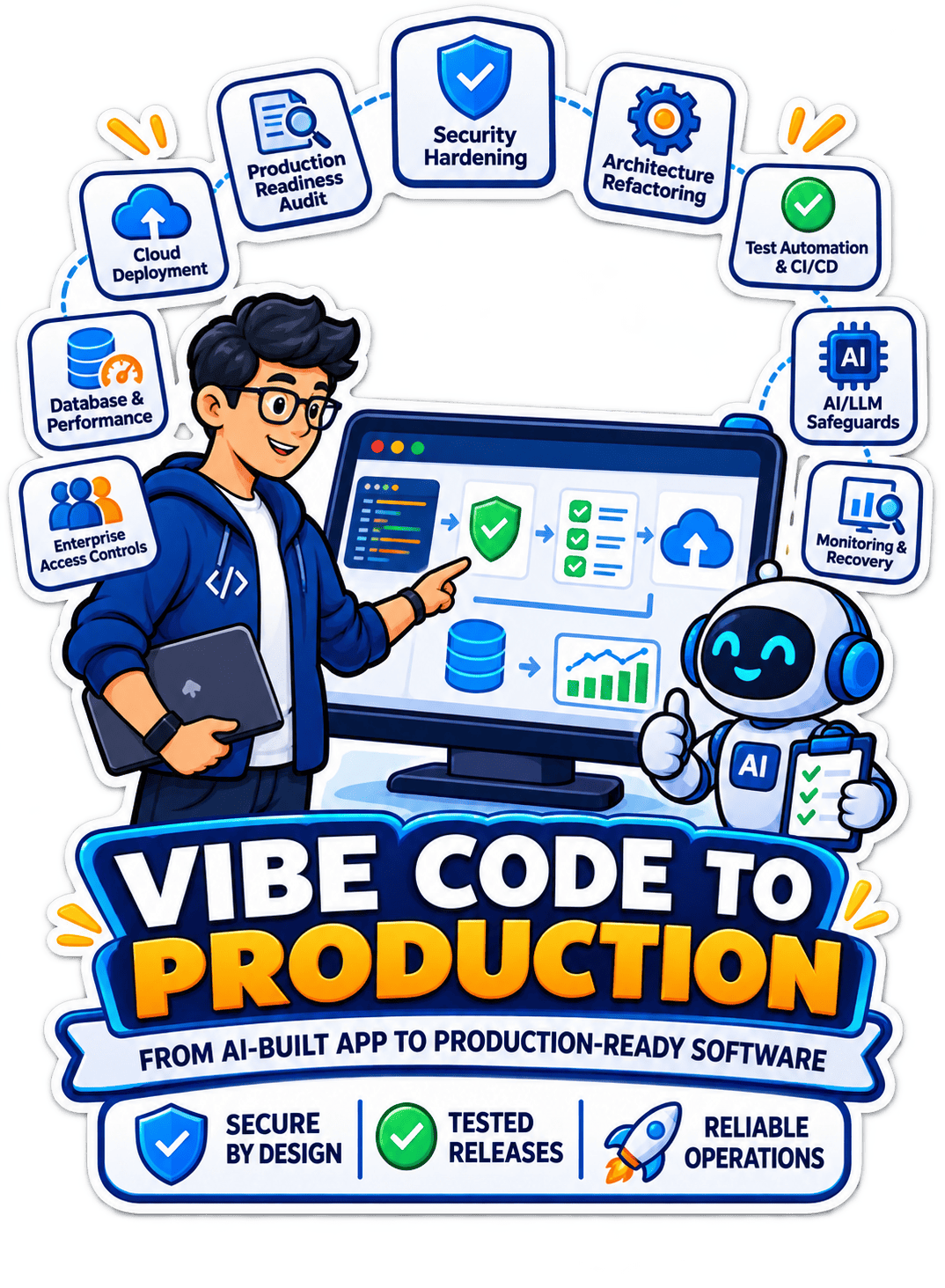
Vibe Code to Production

Turn your AI-built app into software your customers and teams can depend on.

Your app works. Now customers are about to depend on it. Taking vibe code to production means checking and strengthening that app for everyday use, including access controls, testing, and recovery.

Our senior engineers handle that work, preserving useful features while resolving launch blockers. For US companies, Ansi ByteCode LLP brings Microsoft Solutions Partner credentials and 12+ years of enterprise software delivery experience.
+
Years in AI & Software Development
+
AI & Software Projects Delivered
+
Certified AI & Technology Experts
%
Client Retention Rate

The Real Risks of Vibe Coding in Production

A working demo rarely shows how an app handles mistakes. Before launch, check what happens when permissions change, requests fail, or someone uses a feature in unexpected ways.

Secrets and API Keys Left in the Code

API keys and database credentials can remain in source files. Some apps fall back to default passwords when configuration is missing. Client-side secrets are publicly readable, and automated scans can miss unsafe fallback behavior.

One Customer Can See Another Customer’s Data

Login checks do not establish which records someone can access. Changing a record ID may expose another customer’s information. Missing Supabase row-level security or Firebase Security Rules can leave these boundaries unenforced.

Every New Feature Breaks Something Else

Duplicated logic makes a small change affect several features. Without automated tests, regressions go unnoticed. Repeated prompts may fix individual symptoms while introducing new inconsistencies, consuming credits and making the code harder to maintain.

A Data Model That Will Not Scale

Missing indexes and repeated database calls can slow everyday tasks. Untracked schema changes complicate releases and recovery. A distant database adds latency, while growing workloads expose design decisions that testing never challenged.

No Staging, Backups or Monitoring

Without staging, changes reach users before proper checks. Untested backups offer uncertain recovery, and missing alerts delay investigation. Internal tools also become vulnerable when only their original builder knows how to operate them.

Uncapped AI Costs and Prompt Injection

Apps with AI features can incur unexpected usage charges. Missing rate limits and application spending controls increase exposure. Malicious instructions in user input or retrieved content may also influence outputs or trigger unauthorized actions.

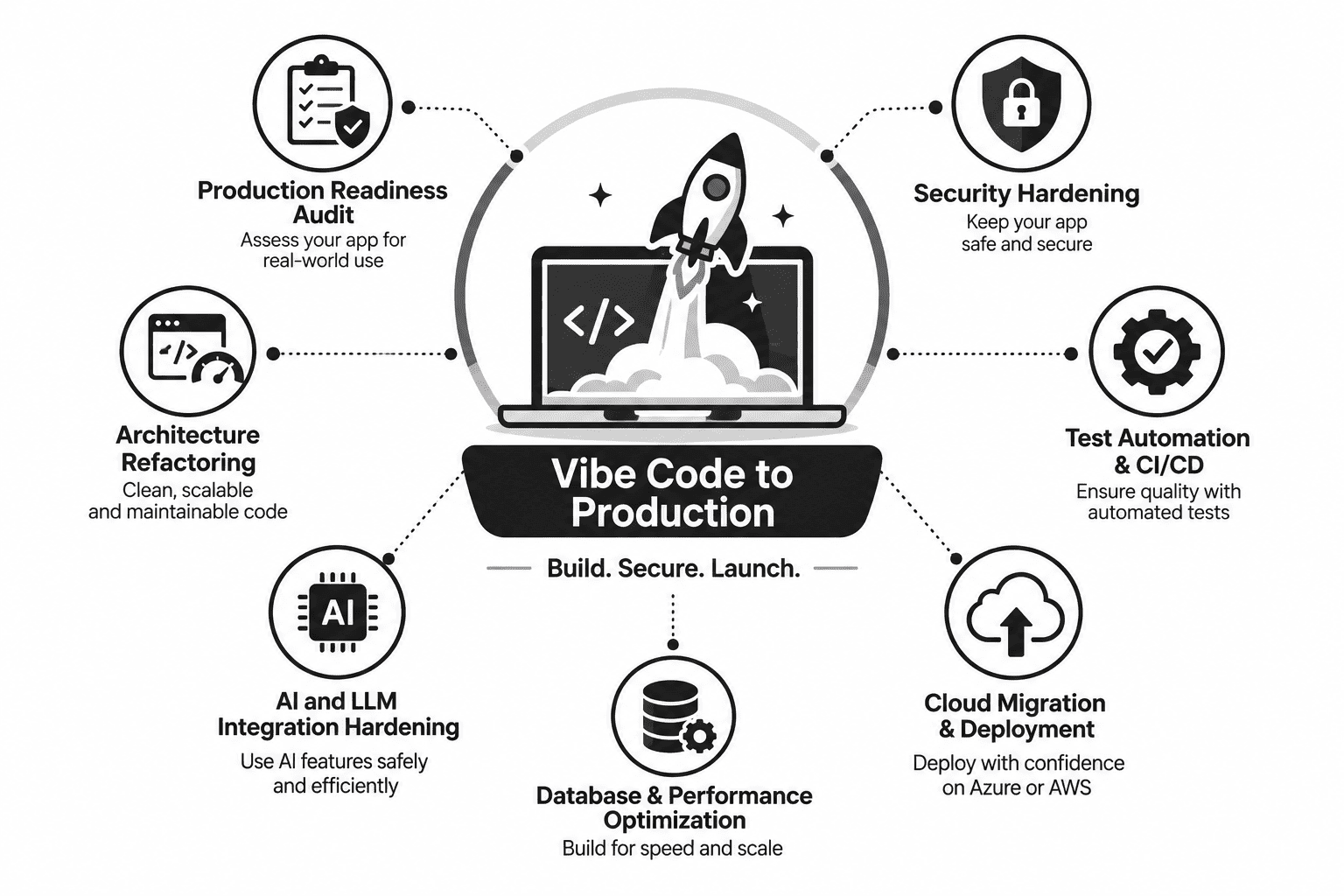
Our Vibe Code to Production Services

We start with the app you have and its intended use. The audit identifies what needs fixing, what can stay, and what reaching production will involve.

Production Readiness Audit

A senior engineer reads the code and runs the app. Automated scans support checks of architecture, authentication, data access, secrets, dependencies, databases, and deployment. We investigate what could prevent a safe launch, then explain which components need fixing, restructuring, or replacing.

Security Hardening

Exposed credentials are rotated and moved into secure storage. We correct authentication and authorization gaps, check tenant isolation, and apply appropriate database access rules. Input validation, rate limits, and dependency updates address further risks. Launch-blocking security fixes take priority over new features.

Architecture Refactoring

We separate business logic from screens and route handlers. Repeated logic is consolidated, with clear interfaces between application components. Better error handling and structured logs help developers investigate failures. We preserve working features wherever possible and rebuild only where the audit justifies it.

Test Automation and CI/CD

Tests exercise the application’s critical journeys and underlying logic. We combine unit, integration, and end-to-end coverage, using tools such as Playwright where suitable. GitHub Actions or Azure DevOps runs release checks, with branch protection and staging validation before changes reach production.

Cloud Migration and Deployment

This is custom heading element

AI and LLM Integration Hardening

For applications with AI features, we add usage limits and application-level spending controls. Prompt injection defenses restrict how untrusted inputs affect tool access. Output evaluations check quality, while tested fallbacks, webhook handling, and monitoring help the app respond predictably when dependencies fail.

Database and Performance Optimization

We review schemas, indexes, queries, and caching against actual usage. Versioned migrations make database changes traceable and repeatable. Hosting the application near its database reduces avoidable latency where residency requirements allow. Load testing then checks response times and failures under expected demand.

Enterprise SSO, Compliance and Audit Logging

Microsoft Entra ID single sign-on and role-based permissions support company access policies. We configure audit records, retention, and deletion around agreed requirements. Documentation supports security reviews and relevant HIPAA, SOC 2, or GDPR obligations, alongside your wider compliance arrangements.

Ongoing Engineering and AI Code Review

After launch, new features follow the same engineering standards. AI-assisted commits pass through agreed review and testing gates before release. Your team can keep using its preferred coding tools, with senior engineers checking changes, maintaining integrations, and addressing issues as the application evolves.

Make Your AI-Built App Ready for Launch

Prepare your vibe-coded application for real-world use with better security, reliable performance, and production-ready code.

Industries We Serve

The checks depend on what your application handles. Customer records, payments, operational dependencies, and internal policies each introduce different requirements before an AI-built app goes live.

Healthcare

We strengthen AI-built scheduling, intake, and care-team tools with HIPAA-aware access controls and audit logs. Permission checks help restrict patient information to authorized staff before launch.

Finance and Banking

Client portals and internal finance tools need clear data boundaries. We strengthen tenant isolation, audit trails, and technical documentation for vendor assessments and security reviews.

Retail and Ecommerce

Storefronts and back-office apps depend on reliable payment handling. We test Stripe webhooks, failed transactions, and performance under peak demand before customers encounter problems.

Insurance

Claims and policy tools need permissions that reflect staff responsibilities. Access checks, retention rules, and change histories help teams manage sensitive records and investigate updates.

Manufacturing

Shop-floor experiments can become essential daily tools. Company sign-on, monitoring, tested backups, and documented recovery help operations teams rely on them as usage grows.

Logistics and Supply Chain

Dispatch, tracking, and inventory apps depend on ERP and TMS connections. We test retries, duplicate messages, and recovery when integrations become unavailable or return incomplete information.

Vibe Coded Apps We Take to Production

Some apps are approaching their first launch. Others already support daily work. We assess the code against its next responsibilities, rather than treating every prototype alike.

Internal Business Tools

Apps replacing spreadsheets often become part of everyday operations. We add company sign-on, Microsoft 365 and Teams connections where needed, and documentation so others can maintain them.

SaaS MVPs Heading to Launch

Founders using Lovable, Replit, or Bolt need more than working demos. We check billing, account separation, and release processes before paying customers begin using the product.

AI-Powered Apps and Agents

Chat assistants, document tools, and agents need controlled model and tool access. We add evaluations, usage limits, injection defenses, and monitoring around their AI features.

Customer Portals and Dashboards

Customers should only see records they are authorized to access. We test permissions across pages, APIs, downloads, and shared links, including attempts to bypass the interface.

Marketplaces and Multi-Tenant Platforms

Multiple roles and payment flows create complicated access boundaries. We review the data model, transaction handling, and tenant separation before expanding participation or adding features.

Prototypes Built for Investors

A successful demo can lead to funding or pilot commitments. We prepare the application for technical due diligence, customer security reviews, and its first users.

What You Get From Us

You receive clear findings before deciding what to fix. For implementation projects, we also provide tested changes, deployment tools, and documentation your team can use after handover.

Production Readiness Report

A plain-language assessment covers security, architecture, data, operations, and code health. Findings are ranked by urgency and business impact, with launch blockers clearly identified.

Keep, Refactor or Rebuild Verdict

You receive a recommended path with supporting reasons. We explain the practical tradeoffs and estimated costs, including rebuilding when preserving the existing code is not justified.

Hardened and Tested Codebase

Agreed launch blockers are fixed and checked through relevant automated tests. A change summary explains what was updated and which issues require further work.

Staging and Deployment Pipeline

A staging environment and CI/CD pipeline support release checks. Documented rollback or recovery procedures account for application changes and database migrations where required.

Monitoring, Backups and Recovery

Error tracking, uptime alerts, and automated backups support live operations. Restore testing checks that recovery works, with responsibilities and procedures documented for the operating team.

Documentation and Ownership Transfer

Architecture notes, deployment instructions, and a walkthrough support handover. Agreed custom deliverables reside in client-controlled accounts, with third-party licenses and dependencies documented.

Our Vibe Coding to Production Process

The first decision is what the application needs before people depend on it. We assess the existing build, agree launch priorities, and work through fixes in order of risk, with testing throughout delivery.

Step 1: Consultation and Repository Access

We discuss the app, intended users, and launch plans. Repository and environment access are agreed before review begins. Existing documentation, known issues, and business priorities help define the assessment’s scope and required access.

Step 2: Production Readiness Audit

Senior engineers inspect and run the application alongside automated scans. Findings cover security, maintainability, performance, and operations. We then recommend what to keep, refactor, or rebuild, with a prioritized plan for implementation.

Step 3: Security Fixes First

We address exposed secrets, unsafe defaults, and access-control failures first. Tests check the corrected behavior, including attempts to access another user’s records. Remaining security work is tracked against the agreed launch requirements.

Step 4: Refactoring and Test Coverage

Working features guide the refactoring effort. We simplify fragile areas and add tests around critical journeys. Each change is checked against existing behavior, helping prevent fixes from breaking the functions users already need.

Step 5: Infrastructure, Staging and Launch

We configure hosting, staging, deployment pipelines, and monitoring. Rehearsals check migration and recovery procedures. Before launch, we verify acceptance criteria and confirm who approves deployment, monitors the release, and handles early support.

Step 6: Handover and Ongoing Support

Your team receives documentation, operating instructions, and a technical walkthrough. We review outstanding work and support responsibilities. Where ongoing engineering is agreed, future changes continue through the same testing and review process.

Industry Recognition

Why Choose Ansi ByteCode LLP for Vibe Code to Production

Your prototype has already helped you test an idea. We build on that work with senior engineering review, targeted fixes, and documented handover. You know what changed and how to maintain it.

Microsoft Solutions Partner

Our Microsoft Solutions Partner designations cover Data & AI (Azure), Infrastructure (Azure), and Digital & App Innovation (Azure), reflecting capabilities assessed through Microsoft’s partner program.

Senior Engineers Review Every Change

Senior engineers review code changes alongside automated checks. Independent review tests assumptions and examines failure paths, giving AI-assisted fixes to human scrutiny before they reach production.

Harden Without a Full Rewrite

We preserve useful workflows and sound components wherever practical. Audit findings guide targeted refactoring, with selective rebuilding when necessary and a full rebuild if justified.

Production Inside Your Azure Tenant

Azure deployments use client-controlled accounts, with Entra ID, Key Vault, and Azure Monitor where appropriate. We configure controls around company requirements and also support AWS.


12+ Years of Enterprise Software Delivery

We have built and maintained enterprise software since 2014. That experience helps us spot integration problems, test failure scenarios, and prepare teams to run applications after launch.

You Own the Code and Infrastructure

Agreed custom code, infrastructure definitions, and documentation remain in your accounts. We document third-party dependencies and licenses so ownership and ongoing operating requirements are clear.

Vibe Code to Production Technology Stack

We choose technologies around your application, existing infrastructure, and maintenance needs. The focus is secure access, repeatable releases, reliable operation, and straightforward handover.

Claude Code

Gemini CLI

Cursor

GitHub Copilot

Windsurf

Codex

Claude

Lovable

Bolt.new

Base44

Replit

v0 by Vercel

Angluar Logo

Angular

ReactJS Logo

React

TypeScript

Next.js

Vue.js

Tailwind CSS

.Net Core Logo

.NET / ASP.NET Core Web API

MS SQL

PostgreSQL

MongoDB

Node.js Logo

Chroma

FastAPI

Azure Cosmos DB

Supabase

Firebase

Azure

AWS

Vercel

Docker

GitHub Actions

Netlify

Playwright

Cypress

Jest

Postman

Vitest

Case Studies

See how we’ve helped businesses across industries solve real challenges with AI, from strategy and integration to full-scale deployment and measurable results.

What our Clients say About us

Don't just take our word for it. Here's what businesses across the US say about working with Ansi ByteCode LLP as their AI consulting partner.

FAQs on Taking Vibe Code to Production

These answers cover what changes before launch, when rebuilding is necessary, and how scope affects timing and cost. They also explain how AI-assisted development can continue afterward.

Taking vibe code to production means preparing an AI-built application for dependable use. It involves reviewing and improving security, architecture, testing, deployment, and recovery. The required work depends on the existing code and intended users.

Vibe-coded software can be used in production after appropriate review and testing. Working features alone do not prove it is secure. Check access controls, dependencies, data handling, and recovery against the risks the application will face.

Not necessarily. The audit may recommend targeted fixes, refactoring, or replacing selected components. A full rebuild may be justified when repairs become impractical. We explain the costs and tradeoffs before you decide whether to proceed with implementation.

Small apps with limited fixes may need one to two weeks of hardening after assessment. Complex applications can take months. Integrations, data migration, and security requirements affect timing. The audit establishes a realistic implementation schedule.

For indicative budgeting, focused hardening projects may cost $3,000-$15,000. Extensive refactoring, enterprise integrations, or rebuilding can cost more. The audit establishes scope. Hosting, third-party services, ongoing support, and any AI usage charges add recurring costs.

We review applications built with Visual Studio, Lovable, Replit, Bolt, Cursor, and Claude Code, among others. Feasibility depends on repository access, available exports, underlying technologies, and platform restrictions. The assessment establishes what can be modified, tested, and deployed.

Yes. Your team can keep using AI coding tools. Changes should pass code review, automated tests, and staging checks before release. Authentication, permissions, payments, and database changes need careful review because mistakes can affect existing users and records.

Our Blogs

Explore our latest insights, guides, and expert perspectives on AI. This will help you stay informed and make smarter business decisions.

What Is Predictive Maintenance? How It Works and Why It Matters

Critical equipment doesn’t fail on schedule. A motor overheats without warning.

Agentic AI vs Generative AI: Which One Is Right Fit for You?

If you’ve been comparing Agentic AI vs Generative AI, you’re probably wondering which one can actually make a bigger difference to your business

Let’s build your dream together.